
Infrastructure Health
Servers, services, endpoints, databases, network components and cloud resources can be monitored through one operations view.
You don't need more blinking dashboards. You need a product that helps your team understand which infrastructure issue matters, who should act, how fast it must move and whether the business service is at risk. Our ITOM turns infrastructure signals into operational visibility, incident response and management control.
Servers, services, endpoints, databases, network components and cloud resources can be monitored through one operations view.
Repeated alerts, low-value signals and duplicate events can be filtered so teams focus on issues that need real action.
Availability and service degradation become visible before the impact reaches users, branches, field teams or customers.
Alerts can move into assigned incidents so action does not remain trapped inside monitoring screens and informal calls.
CPU, memory, storage, bandwidth, database and application resource pressure can be tracked before performance breaks.
Infrastructure events can be linked to affected applications, departments, locations or business processes for faster prioritization.
Teams get supporting context around alerts, dependencies, recent events and recurring patterns instead of guessing from scratch.
Shift teams, infrastructure teams and support managers can work from common status, action history and pending issue visibility.
Leaders see uptime, incident ageing, recurring alerts, capacity trends and operational risk without chasing status updates.

ITOM connects monitoring signals with operational response: alert routing, incident ownership, escalation, capacity visibility, service impact and management reporting.
Infrastructure rarely fails politely. A server slows down, storage crosses threshold, a database queue builds, an API stops responding, a network link becomes unstable or a cloud resource starts behaving differently. By the time users complain, the support team is already late.
ITOM is built to reduce that delay. It gives operations teams a structured way to monitor infrastructure health, understand alert priority, assign ownership, track response and report service impact.
The product is not only about showing red and green indicators. It is about helping teams decide what matters, where the impact is, who should act and how the situation is moving.
Teams spend less time checking scattered dashboards and more time preventing downtime, resolving incidents, controlling alert noise and keeping management informed with real operational context.
We can review your infrastructure monitoring, alert flow, incident response process, escalation rules, uptime reporting, capacity pressure points and the operational gaps between alerts and action.
We will help identify where signals are ignored, where teams lose time and how ITOM can create clearer ownership, response and reporting.
ITOM should help operations teams move faster with less confusion. It reduces the gap between monitoring and action by making infrastructure health, service risk, alert priority and ownership visible in one operating rhythm.
The product helps teams detect degraded services, unhealthy infrastructure and recurring failures before the impact becomes widespread.
Duplicate, repeated and low-priority alerts can be reduced so teams do not miss the real issue inside operational noise.
Alerts can be assigned to the right team with status, priority and action history so responsibility is not lost during pressure.
Capacity trends help teams act before storage, memory, CPU, network or database constraints become performance incidents.
Event context, service mapping, historical incidents and dependency visibility help teams narrow down possible causes faster.
Infrastructure events can be connected to applications, departments, locations or customer-facing services for better prioritization.
Shift teams and support managers can work from a shared status view instead of relying on calls, chats and partial updates.
Management can review uptime, recurring incidents, alert volumes, ageing, service health and response performance.
ITOM implementation should not stop at connecting monitors. The real work is deciding what must be monitored, which alerts matter, how events should be grouped, who owns each response and how management will see service risk before it becomes downtime.
A monitoring tool shows symptoms. ITOM must create an operating rhythm: signal quality, event context, priority rules, routing, escalation, incident linkage, shift handover and service-impact reporting.
We identify the infrastructure, applications, jobs and dependencies that directly affect business operations.
Servers, storage, network, databases, APIs, services and cloud resources are grouped for practical monitoring.
Thresholds, severity, duplication, repeat alerts and false positives are tuned to reduce operational noise.
Each alert category is mapped to the right team, owner, escalation path and response expectation.
Critical events are linked to ticketing or response workflows so alerts become accountable action.
Severity, ageing, non-response and business impact rules are configured for timely manager attention.
Views are prepared for NOC teams, support leads, application owners, infrastructure managers and leadership.
Live alerts are reviewed, noisy rules are tuned, ownership gaps are corrected and reports are refined.
These are the moments where ITOM proves its value because the team needs clarity, not just another alert on a screen.

ITOM helps infrastructure, application, NOC, service desk and leadership teams work from one response model.
Review IT Operations →Our ITOM product is built around operations response. It connects monitoring signals with event quality, ownership, incident flow, service impact, escalation and reporting. That makes it more useful to teams that need to protect uptime under pressure.
A dashboard full of alerts where teams still need manual calls, separate tickets and repeated checking to understand what needs action.
A response-oriented operations layer where alerts, ownership, incidents, escalation and management visibility stay connected.
Explore Sampark services across transformation, applications, cloud, security, data, automation, and delivery support.
Business process digitization, digital roadmap, design thinking, modernization, and custom digital solution planning.
Application development, integration, testing, enterprise platforms, APIs, mobile apps, and delivery support.
Cloud migration, infrastructure modernization, DevOps, monitoring, NOC/SOC, managed IT, and support services.
Security assessment, protection controls, monitoring, tool implementation, endpoint security, identity, and network defense.
Data platforms, BI, database services, workflow automation, IoT, MES, video analytics, and omnichannel communication.
Technology advisory, resource augmentation, contract staffing, payroll outsourcing, and dedicated development teams.
AI agents, NLP, and workflow intelligence for patient support, healthcare records, and hospital operations.
Machine learning, IoT signals, and agentic monitoring for manufacturing, maintenance, energy, and shopfloor intelligence.
Vision AI for workplace safety, surveillance intelligence, restricted zones, movement analysis, and visual evidence workflows.
AI agents that classify work, read documents, recommend actions, and move business processes with human control.
Enterprise-grade GenAI using approved knowledge, role-aware copilots, document intelligence, and governed AI responses.
AI for threat correlation, anomaly detection, vulnerability prioritization, SOC/NOC assistance, and security response workflows.
Predictive models and GenAI summaries that surface demand signals, risk patterns, operational drift, and decision-ready insights.
Productized solutions for operations, security, AI, industry, utilities, and healthcare.
Service, asset, IT operations, and AI-assisted support platforms.
Endpoint, OT, IoT, medical device, AI, and vulnerability protection.
Network exposure, infrastructure visibility, and remediation planning.
AI assistants, recruitment automation, agentic workflows, and vision AI.
CRM, ERP, learning, clinic, and utility business workflows.
Manufacturing, utility, field force, warehouse, and billing platforms.
Clinic workflows, medical devices, patient support, and facility visibility.
Application, data, AI, cloud, DevOps, and security stacks used across real delivery.
Interface stacks for portals, dashboards, responsive web apps, and design-led application experiences.
Service-layer technologies for APIs, integrations, microservices, caches, secure backend systems and enterprise application logic.
Mobile stacks for field teams, customers, workforce users, offline workflows, and cross-platform delivery.
Relational, document, vector and cloud database platforms for transactional systems, reporting, analytics and operational workloads.
Streaming, batch, search, warehouse, BI and orchestration tools for moving, processing and presenting high-volume data.
Model, data, vision, GenAI, RAG, vector search and automation stacks for applied AI systems.
Cloud platforms and infrastructure services used for hosting, storage, compute, networking, identity, delivery and scale.
Security platforms and DevSecOps controls across endpoint, identity, firewall, application security, monitoring and exposure management.
Domain-led IT, digital, AI, integration, workflow and operations solutions for real business environments.
Connected vehicle, fleet, dealer, service, telematics, uptime and owner platforms.
Service delivery, monetization, migration, billing, fraud and partner operations.
Clinic, hospital, patient, records, diagnostics, device, billing and facility workflows.
Planning, production, shop floor, supply chain, quality, service and sales operations.
Smart metering, field operations, warehouse control, billing support and consumer service.
Institution, workforce, course, learner, assessment, communication and reporting platforms.
Banking workflows for onboarding, loans, risk, compliance, customer service and fraud.
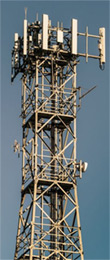
Telematics, vehicle health, uptime, fuel, EV metrics, trips, dealer workflows and owner apps in one operations layer.
Read More
API monetization, subscriber services, consent, wallet, billing, provisioning, fraud and analytics for telecom operations.
Read More
Clinic workflows, appointments, records, reports, billing, assets, device security and patient support in one flow.
Read More
ERP, MES, production, supply chain, warehouse, quality, maintenance, safety, sales and dashboards connected.
Read More
Meter installation, indexing, warehouse, workforce, mobile execution, billing support and HES/MDM integration.
Read More
School ERP, LMS, admissions, fees, exams, attendance, communication, training workflows and learning analytics.
Read More
Onboarding, eKYC, loans, risk, customer lifecycle, contact center, documents, fraud and compliance workflows.
Read MoreCloud, AI, ERP, CRM, database, distribution, and enterprise software licensing support through leading technology partners.
Licensing, implementation, migration, integration, and support across cloud and AI platforms.
 AWS
Compute · Storage · Migration · Backup · Security
AWS
Compute · Storage · Migration · Backup · Security
 Microsoft Azure
Cloud infra · Apps · Security · Data · DevOps
Microsoft Azure
Cloud infra · Apps · Security · Data · DevOps
 Google Cloud
GCP infra · BigQuery · APIs · AI/ML · Migration
Google Cloud
GCP infra · BigQuery · APIs · AI/ML · Migration
 IBM Cloud
Hybrid cloud · Infra · Data · Enterprise workloads
IBM Cloud
Hybrid cloud · Infra · Data · Enterprise workloads
 OpenAI
GenAI · Chatbots · RAG · Automation · Assistants
OpenAI
GenAI · Chatbots · RAG · Automation · Assistants
 Meta
Ads · Business messaging · Campaigns · Digital reach
Meta
Ads · Business messaging · Campaigns · Digital reach
Microsoft cloud, productivity, collaboration, CRM, automation, and AI licensing support.
Azure
Cloud · Infra · Security · DevOps · Data
 Copilot
AI productivity · Assistants · Knowledge work
Copilot
AI productivity · Assistants · Knowledge work
 MS Dynamics
CRM · ERP · Sales · Service · Operations
Microsoft 365
Teams · SharePoint · Email · Security · Collaboration
Power Platform
Power Apps · Power BI · Automate · Workflows
Implementation
Setup · Migration · Integration · Support
MS Dynamics
CRM · ERP · Sales · Service · Operations
Microsoft 365
Teams · SharePoint · Email · Security · Collaboration
Power Platform
Power Apps · Power BI · Automate · Workflows
Implementation
Setup · Migration · Integration · Support
Enterprise software licensing and delivery support for CRM, ERP, workflow, and business applications.
 SAP
ERP · Integration · Reports · Enterprise workflows
SAP
ERP · Integration · Reports · Enterprise workflows
 Odoo
ERP · CRM · Inventory · Accounting · Apps
Odoo
ERP · CRM · Inventory · Accounting · Apps
 SugarCRM
CRM · Sales · Service · Customer workflows
MS Dynamics
CRM · ERP · Customer service · Operations
Business Automation
Workflows · Approvals · Reports · Portals
Platform Support
Implementation · Migration · Customization · Support
SugarCRM
CRM · Sales · Service · Customer workflows
MS Dynamics
CRM · ERP · Customer service · Operations
Business Automation
Workflows · Approvals · Reports · Portals
Platform Support
Implementation · Migration · Customization · Support
Enterprise database, analytics, cloud data, integration, and reporting solution support.
 Oracle
Database · Cloud · ERP · Licensing · Support
BigQuery / GCP
Data warehouse · Analytics · Cloud data
Azure Data
Azure SQL · Data Factory · BI · Integration
IBM Data
Hybrid data · Enterprise workloads · Cloud support
Reporting & BI
Dashboards · MIS · Analytics · Decision views
Data Integration
APIs · Pipelines · Migration · Reporting
Oracle
Database · Cloud · ERP · Licensing · Support
BigQuery / GCP
Data warehouse · Analytics · Cloud data
Azure Data
Azure SQL · Data Factory · BI · Integration
IBM Data
Hybrid data · Enterprise workloads · Cloud support
Reporting & BI
Dashboards · MIS · Analytics · Decision views
Data Integration
APIs · Pipelines · Migration · Reporting
Authorized distribution support for enterprise software licensing, procurement coordination, renewals, and commercial fulfillment.
 ISO 27001 Certified
 SEI CMMI Level 3
Discovery, solution fitment, licensing alignment, implementation planning, deployment, handover, and managed support.